2025 Recap- growth and achievements
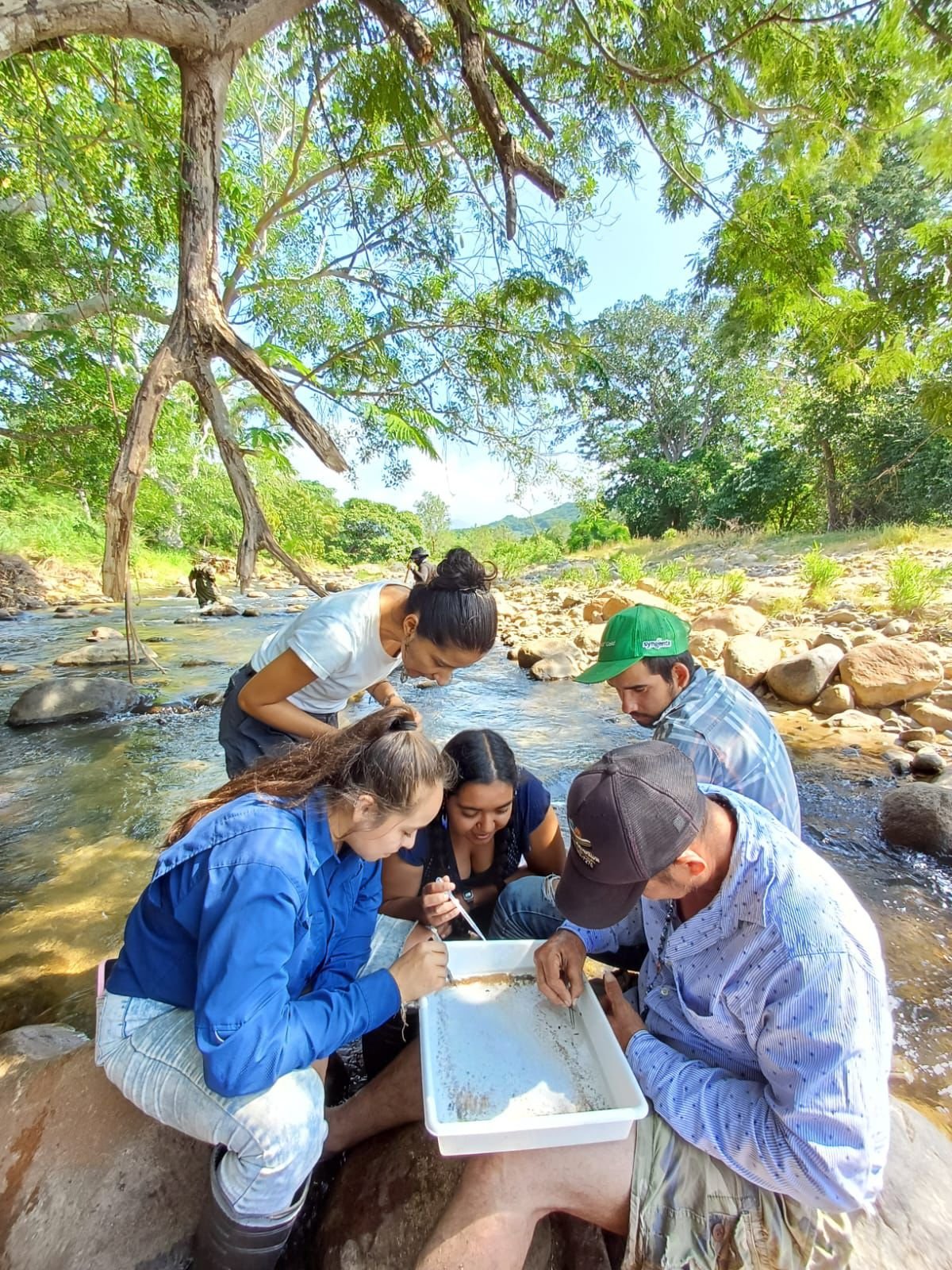
ReSiMar Node Leaders Ximena, Osmaira, Larissa and community volunteers conducting water wonitoring in the watershed
This year, ReSiMar achieved one of the biggest goals we planned years ago: We became an official NGO. It was a long process, but in the end, each effort is priceless. Our board is conformed by wonderful specialists who are truly committed to the regeneration of the whole ecosystem. Our growth is also possible due to the alliance we built with national organizations and regenerative businesses that collaborate with us: Legacy Works Group, Mexicanos Primero, Fondo para la Comunicación y la Educación Ambiental, and Playa Viva are fundamental for the creation of ReSiMar.
Water Node
Teamwork has been a key to growing the node. This year in the dry season, leaders of the Education, Gender, and Marine Conservation nodes did the water monitoring. In summer, the crew expanded with the hiring of the Water Node leader. This new member has worked with high school students who are trained to measure the parameters to know the water quality. In the rainy season, 14 students, one teacher, and seven people from the communities participated in the water monitoring at 9 points around the micro-watershed. Also, the students, the teacher, and the leaders participated in the community laboratory. The final achievement is that in January, we received from Fondo para la Comunicación y Educación Ambiental the first report with results from the first water monitoring year.
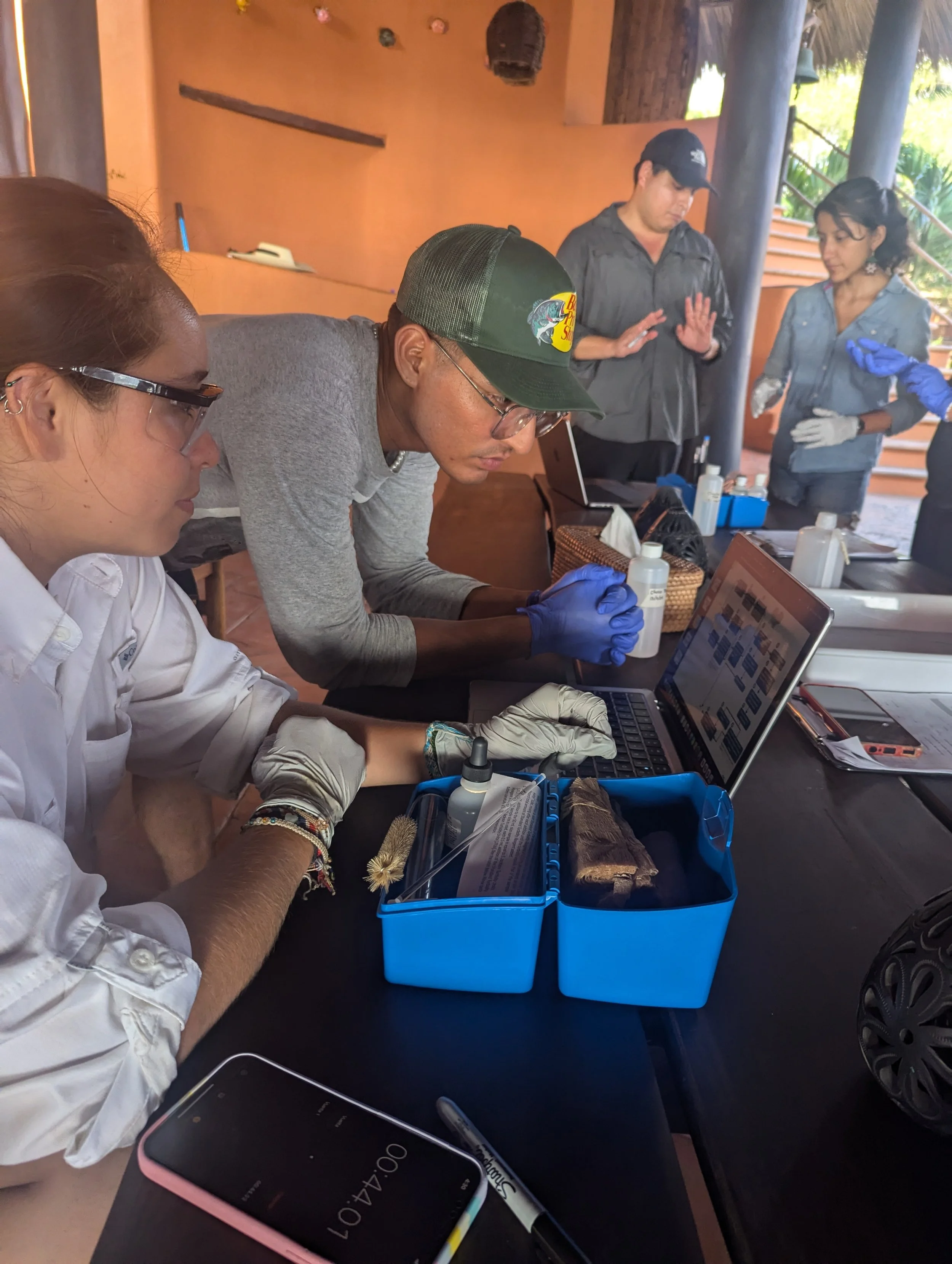
Data collection is crucial for the advancement of the water monitoring
For 2026, we want to keep the number of people who participated in the community scientists project, which involved water monitoring and a community laboratory. Also, we want to make the students the educators in water and environmental education issues for the children in the micro-watershed, and promote respect for the environment and all forms of life.
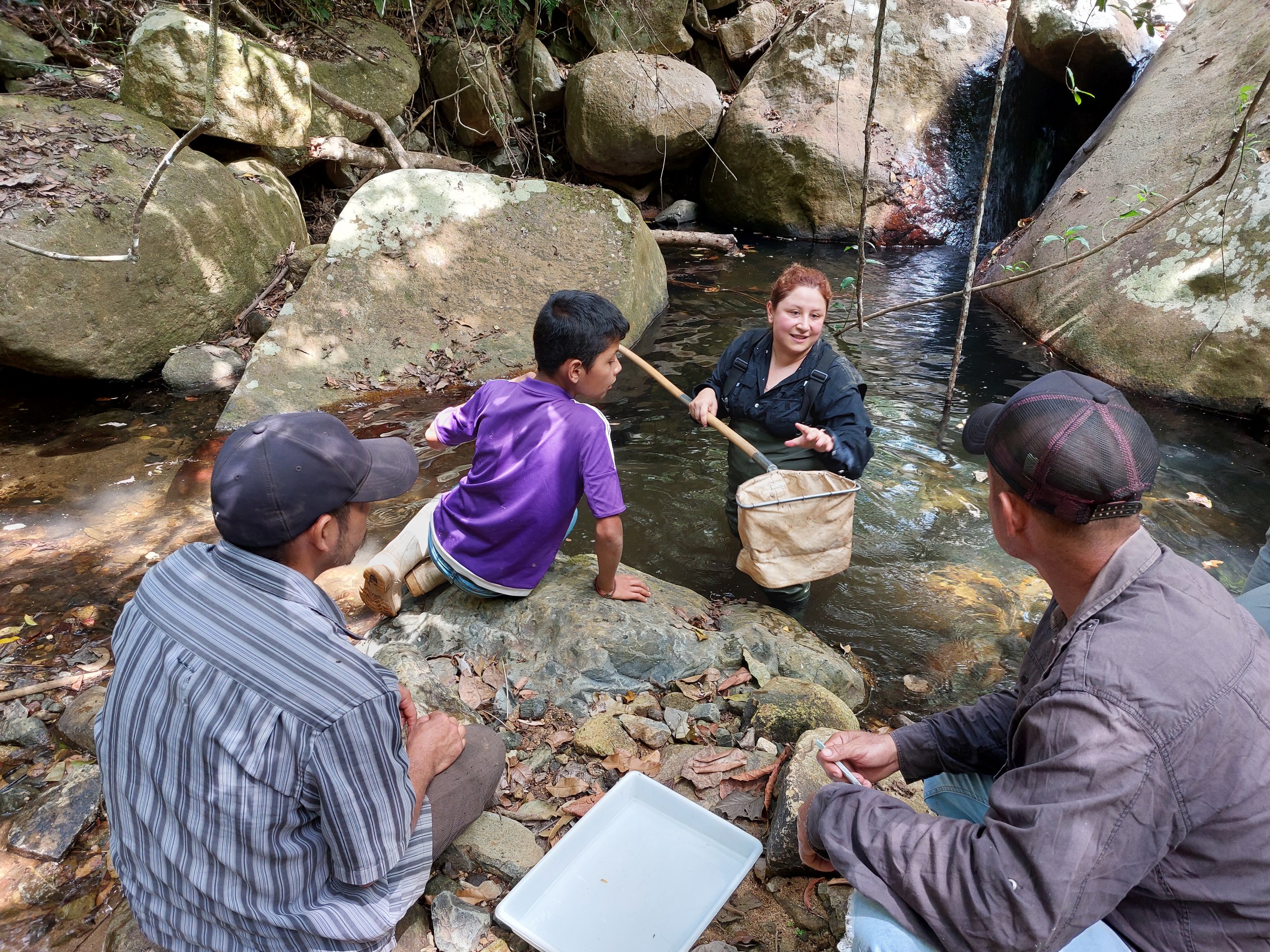
Visiting water specialists train local community volunteers to monitor water health in the watershed
Education Node
Perseverance, community spirit, and teamwork have driven the growth of ideas planted years ago by strengthening regenerative education in the Juluchuca micro-watershed through two big steps: Creating the guide Regenerative Education: Care to Learn, Learn to Care, and developing local capacity to reinforce literacy and math for children of Juluchuca by organizing our first summer camp, designed by CIESAS and Universidad Veracruzana. Due to this proposal, 37 children improved 2% in reading and 15% in maths. In Las Placitas, Mtra. Dora guided 24 children to commit to their academic learning. On the other hand, the EcoAgents were chosen for the Global Youth Mobilization as environmental, scientific, and community-based leaders, while interdisciplinary collaboration across education, permaculture, and marine conservation reinforced learning rooted in local territory.
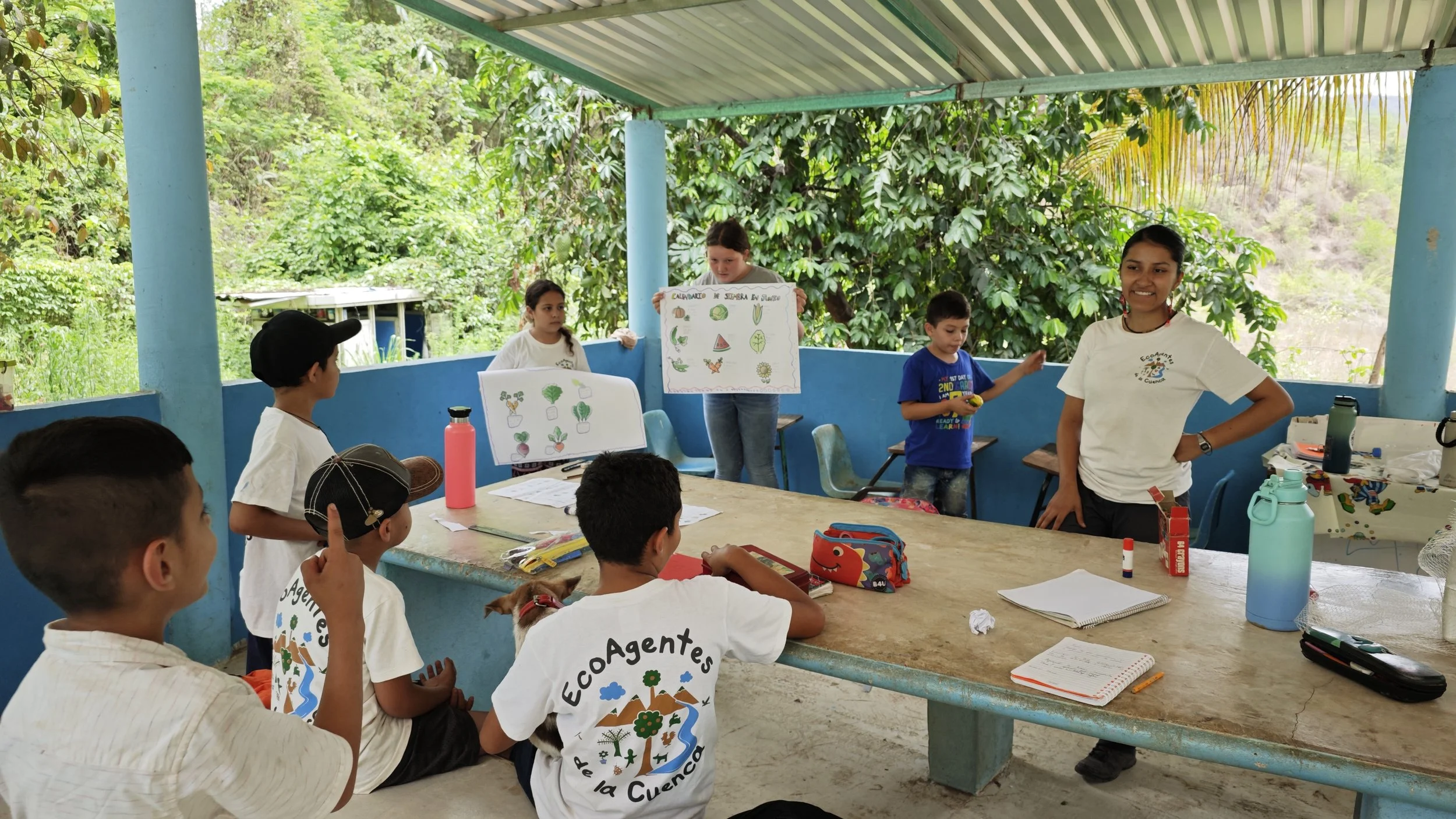
Cross nodal collaborations saw the Permaculture Node leader teaching the EcoAgentes from Las Placitas about native and foreign species and planting seasons
Next year, we are excited to implement the Guerreros por la Educación program by collaborating with teachers to identify passionate students who are persistent with their studies. Also, we aspire to witness the results of the exchange we created with the new teachers who arrived, thanks to the support of Enseña por México. In 2026, our goal is to design more activities where local leaders, such as teachers, students, and EcoAgents, will feel more connected and confident about their leadership. Because Regenerative Education succeeds if the community participates and leads the projects.
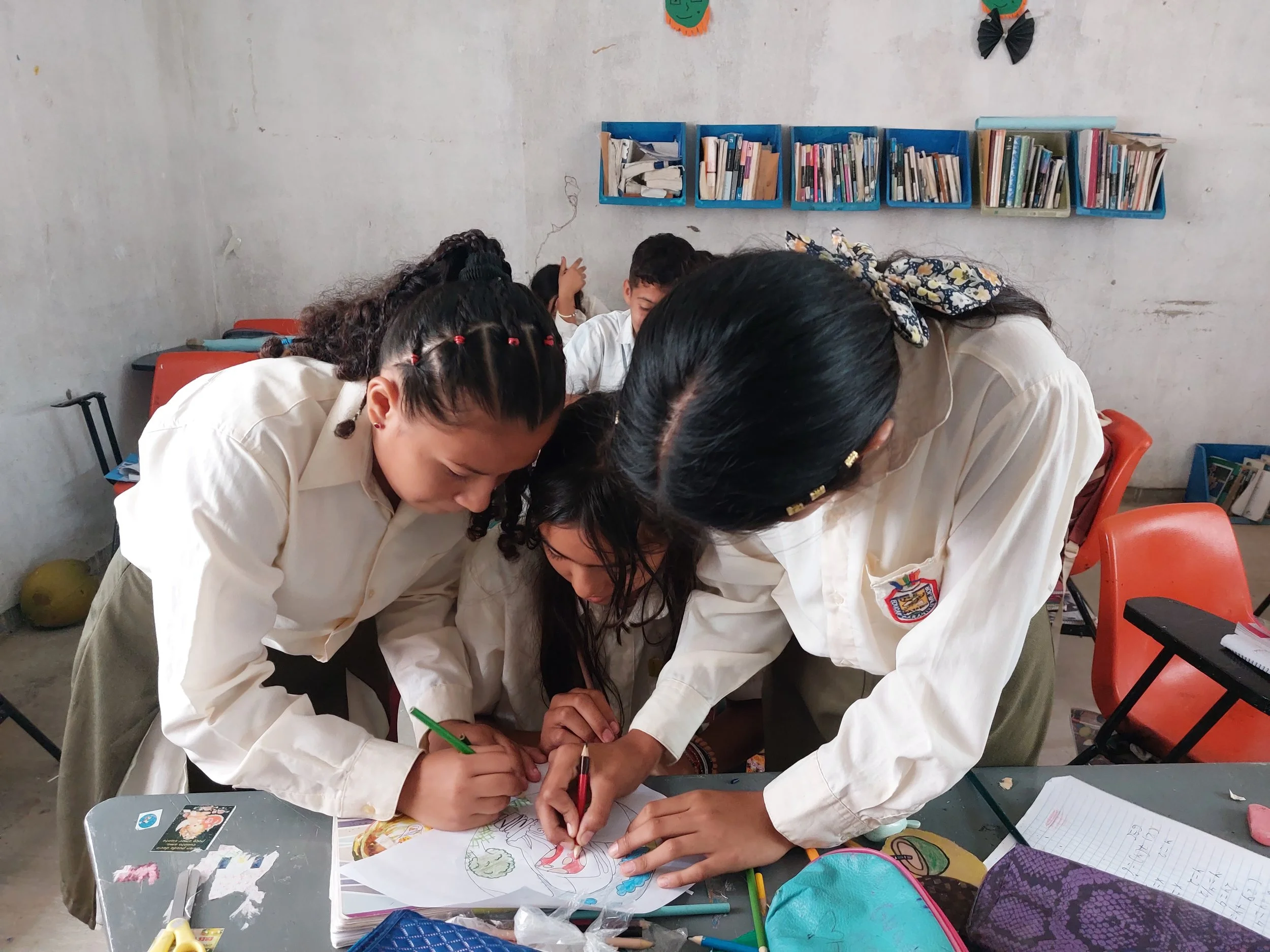
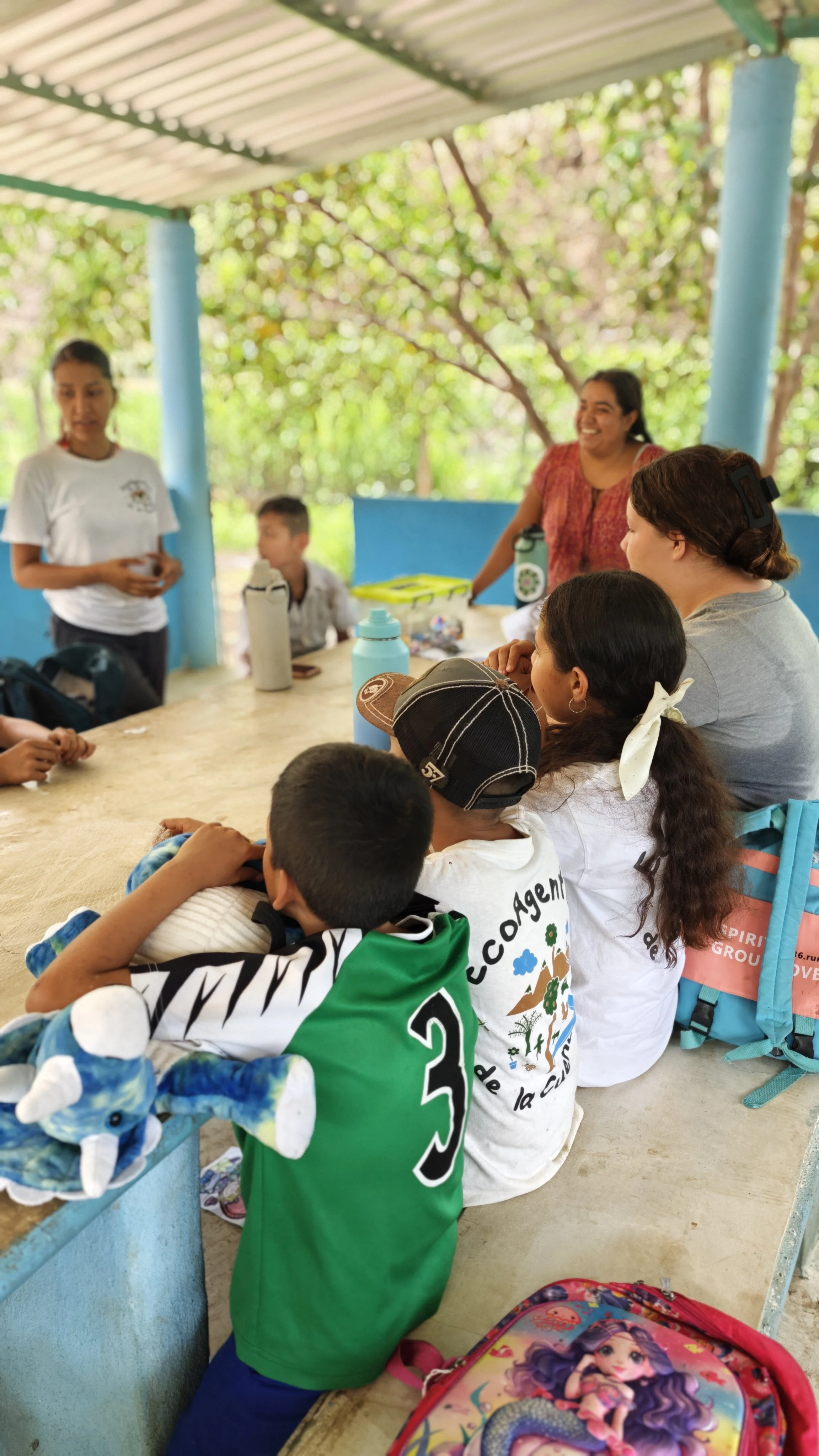
Regenerative education is crucial to the development and engagement of children in the watershed
Marine Conservation Node
This year, the Marine Conservation Node deepened its work as an ongoing practice of caring for the territory, where the ocean, the coast, and the mountains are understood as a single living system. Through the sea turtle camp, the protection of nesting beaches was sustained through night patrols, nest safeguarding, and biological monitoring, in a collective effort that brings together communities and volunteers around the care of marine life. The camp has become consolidated not only as a space for conservation, but also as a place for learning, gathering, and the transmission of knowledge. Each season reaffirms that protecting the ocean also means strengthening people’s connection to their territory, recognizing that conservation is only possible when it is built locally and collectively.
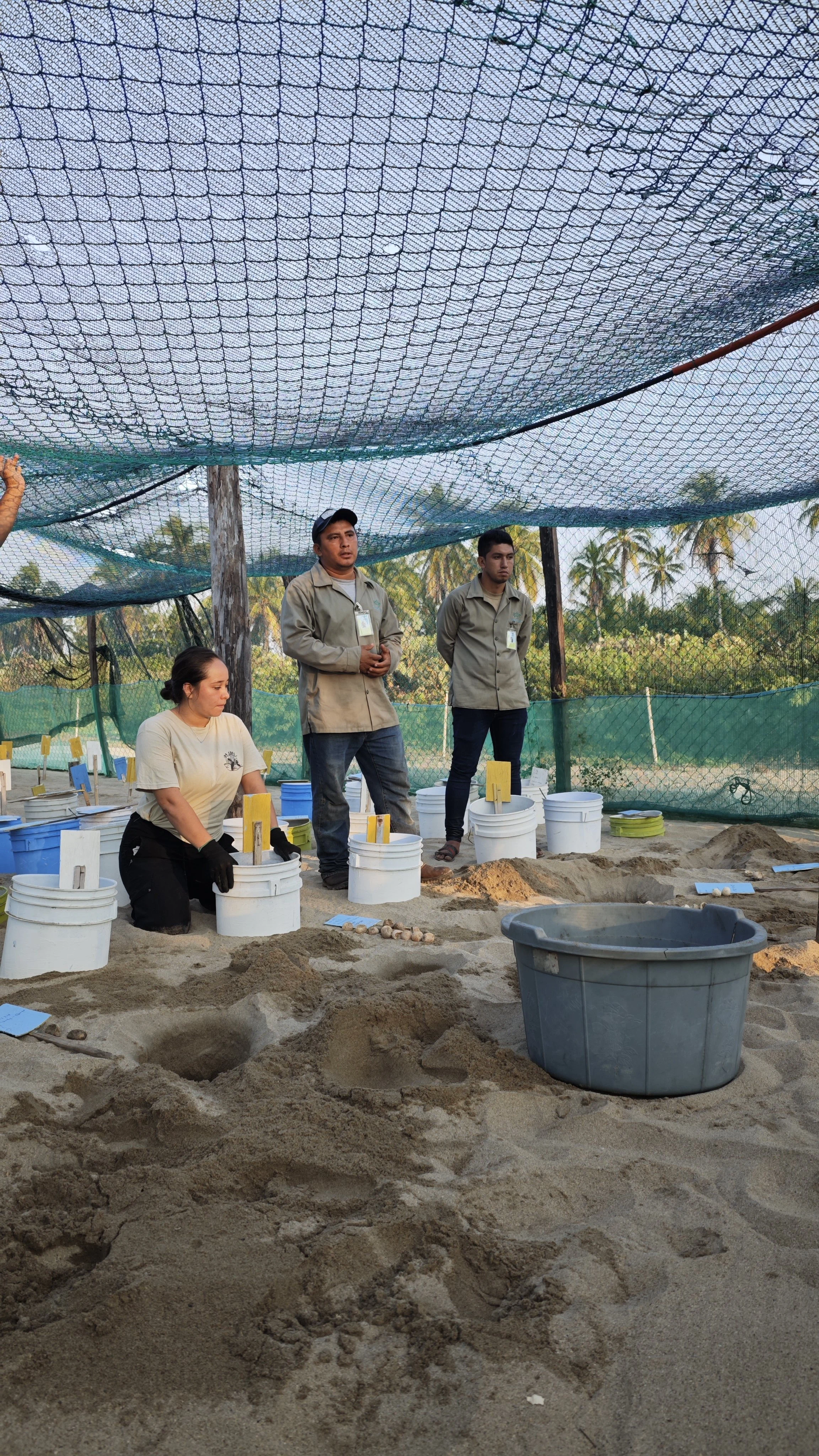
The turtle camp is run by 14 local volunteers
Since 2024, the work of the node has expanded into the mountains with the launch of the jaguar monitoring project, a key species for the health of the terrestrial ecosystems within the micro-watershed. Through community knowledge and collaboration with partner organizations, camera traps set and successfully documented the presence of jaguars, confirming the ecological importance of the territory and reinforcing the need for its integral protection. This intersection between ocean and mountain has strengthened a regenerative conservation vision, where the protection of sea turtles, water, forests, and the jaguar are part of the same story: caring for the territory as a living fabric of which communities are a fundamental part.
For 2026, the Marine Conservation Node seeks to consolidate monitoring processes, strengthen data systematization, and expand community participation in conservation actions, both along the coast and in the mountains. Our commitment is to continue building conservation grounded in science, local knowledge, and collective care, with a long-term vision for the generations who inhabit and will inhabit this territory.
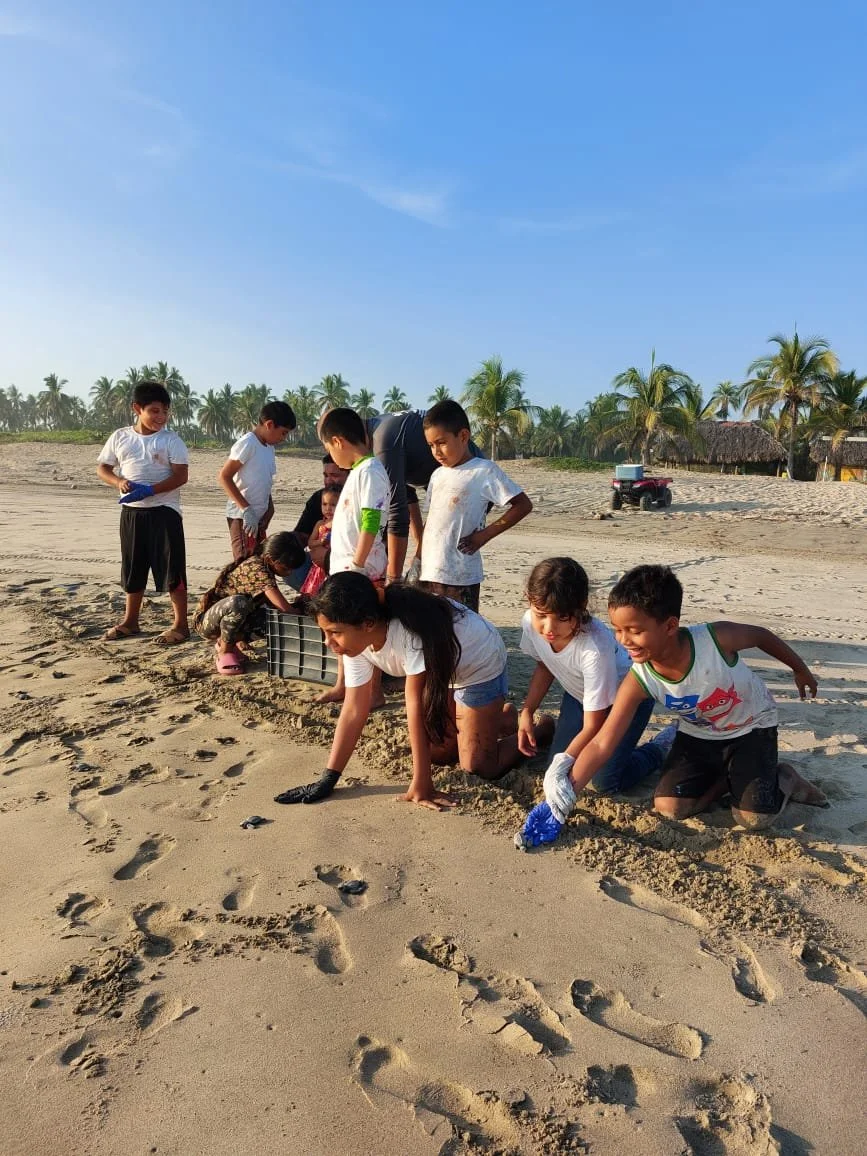
The interconnected node programs allow for transformative cross-nodal experiences to be developed. Here Juluchuca’s EcoAgentes help with a turtle liberation
Permaculture Node > Gender Node
As we close 2025, we reflect on a year of meaningful growth and collective learning in the watershed. What began as a focus on regenerative agriculture has matured into a holistic process of community regeneration, one rooted in women’s leadership, collaboration, and care for the territory. The consolidation of Mujeres de la Tierra, the strengthening of local production, and the expansion of community spaces and regional markets reaffirmed that regeneration is not only about land, but about people and relationships.
This year also marked a natural transition from the Permaculture Node to the Gender Node, recognizing that lasting regeneration requires placing women at the center of social, economic, and environmental change. As we look ahead, our work will focus on strengthening women-led projects, weaving networks across the watershed, deepening collaboration with EcoAgents and other nodes, and amplifying our impact through communication and evaluation with a gender perspective. We move forward with clarity and hope, knowing that the seeds planted together are already shaping a more resilient future.
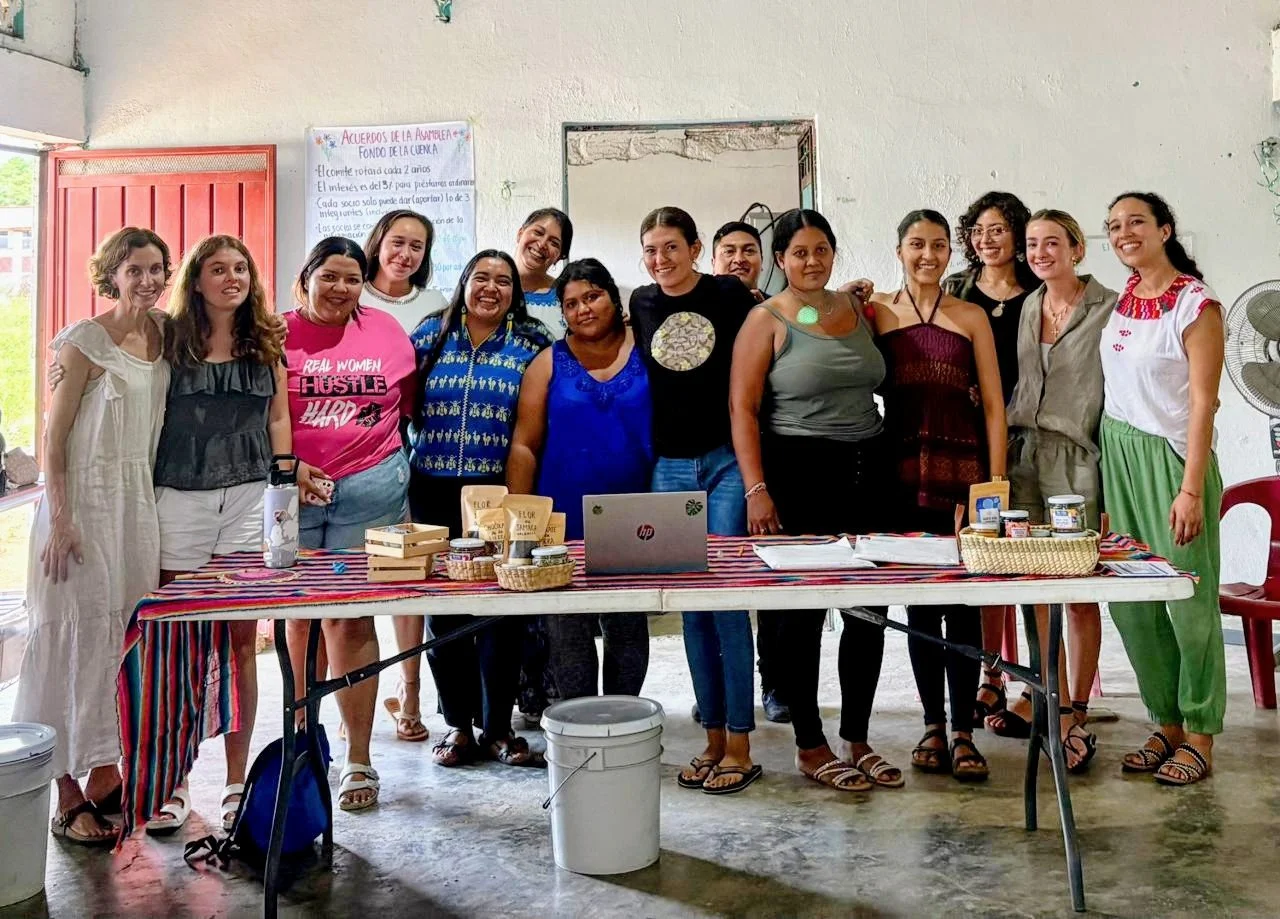
Part of the development of the Gender Node included setting up the Watershed Fund, a space to educate women and children on financial independence
A Shared Effort Rooted in Trust
All of these goals were possible thanks to the support of our donors. Thank you for believing in our organization. With your donation, we are an example of how the State of Guerrero can be a territory where regeneration is a reality.
We also want to recognize the incredible work that each Node Leader made in the microwatershed. These women truly give the best of it to develop strong and community-oriented projects. Without their presence, any of this could happen.
The aim- watershed regeneration. One donation at a time, one step at a time